Iteration 3 · GenAI in Five Cohort 1 · August 2025
C.4.1 Institutional context
Iteration 3 was the first compression of my course from the fifteen-week semester format to a five-day online workshop format. The workshop ran August 18 through August 22, 2025, at one hour of formal delivery per day, sponsored by the College of Engineering and Applied Science (CEAS) at CU Boulder. The workshop was hosted on Luma, a public event-registration and management platform, and was delivered through Zoom for the live sessions.
This was the first phase of distillation in my pioneer practice. With two semester-length iterations completed (CV-1 and CV-2), I had stabilized the four-theme curriculum architecture and developed a working sense of which content elements were essential to the pedagogical experience. Iteration 3 was the test of whether the architecture would survive a six-fold compression in delivery time.
C.4.2 Compression to five days at one hour per day
The compression from semester format (approximately forty-five hours of formal class time) to workshop format (five hours of formal delivery) is the most consequential structural move in my pioneer practice. The compression ratio is approximately nine-to-one in formal time and approximately six-to-one when informal time (chat engagement, asynchronous materials, recording replay) is included.
The compression-as-curriculum-maturation finding I develop in §D.3 follows from the move documented in this section.
C.4.3 Day-by-day structure · one topic per day
Iteration 3 used a one-topic-per-day structure across the five workshop days:
- Monday · Image generation
- Tuesday · Video generation
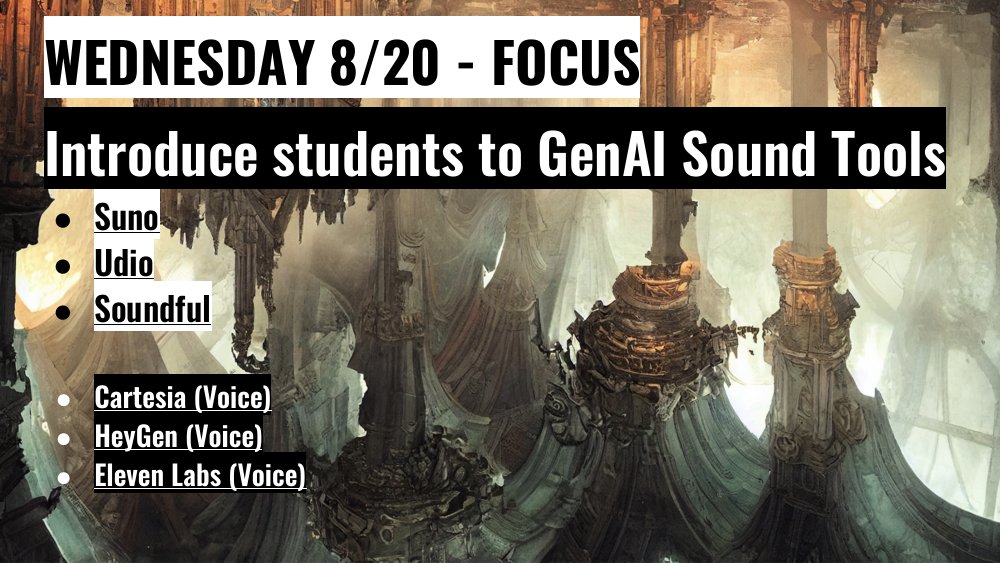
- Wednesday · Audio generation
- Thursday · Research tools
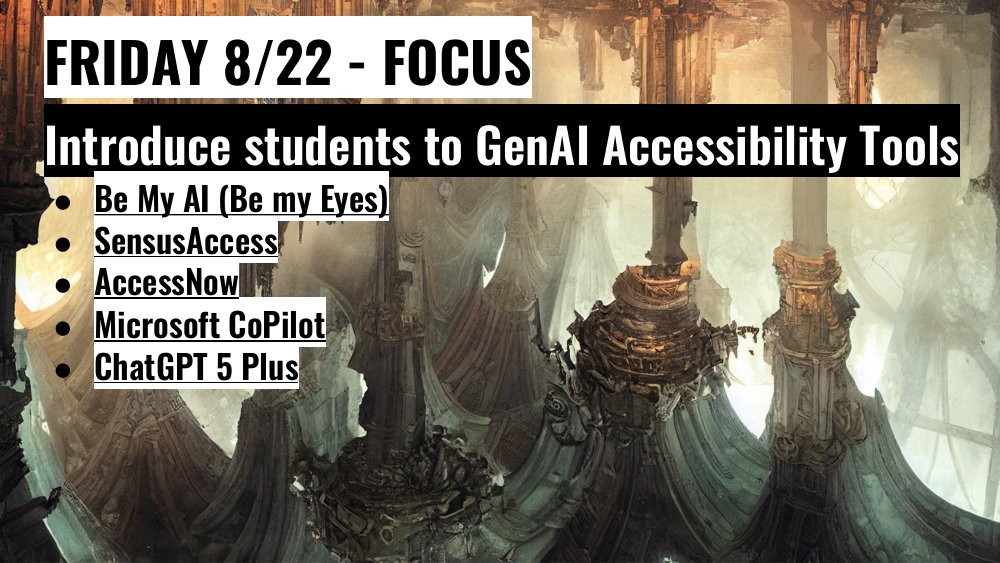
- Friday · Human-centered AI
The workshop deck (DK-3) is twenty-two slides spread across the five days, with content density per slide higher than in the semester decks (DK-1.W01, DK-2.JAN13 through DK-2.MAR10). The compression operated at the slide level as well as at the duration level: more conceptual ground covered per slide, with the live demonstration carrying the explanatory load that lecture-discussion-lab cycles had carried in the semester iterations.
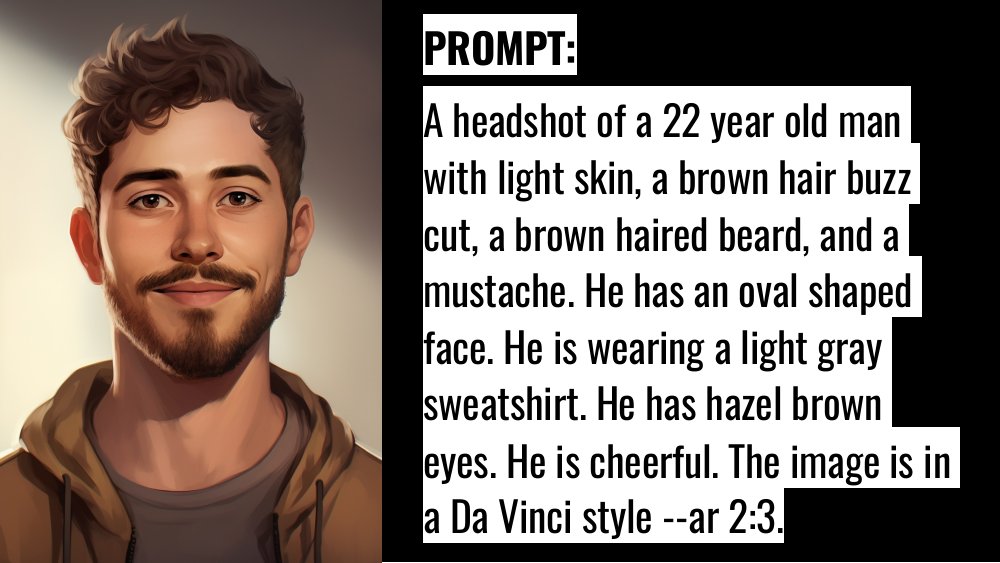
The day-by-day topic structure maps onto the four-theme architecture as follows: Monday and Tuesday sit primarily within the Industry-and-Education theme cluster (image and video tools as workplace and instructional applications). Wednesday sits within the Industry theme. Thursday sits within the Education theme (research tools as instructional aids). Friday delivers the Ethics-and-Accessibility synthesis as the Human-centered AI session that closes the workshop. The four-theme architecture is preserved through the day-by-day topical organization. \autoref{fig:dk3-workshop-gallery} samples the deck across the five days, showing how the one-topic-per-day structure renders visually.


C.4.4 Audience composition · the Luma roster (LR-3)
The Iteration 3 Luma participant roster (LR-3) documents the audience composition with unusual specificity:
- 411 registered total over the eight-month registration window
- 129 attended live across the five days (matching the dissertation draft's "100+ live learners" claim)
- 65% students of the registered population
- 70% expressed interest in an AI Master's program in the registration form
The 411-to-129 attendance pattern shows substantial drop-off between registration and live attendance, which is typical for free online workshops. The 65% student figure indicates that the workshop reached primarily an undergraduate or graduate-student audience rather than an industry-professional one. The 70% Master's-interest figure indicates that the audience read the workshop as relevant to their formal AI education plans.
The audience demographic differs from the semester iterations' undergraduate-CU-Boulder population. Iteration 3 brought my curriculum to a broader online learner base while maintaining a student-heavy composition.
C.4.5 Learner feedback · the Luma survey (LF-3)
The Iteration 3 Luma feedback survey (LF-3) collected twenty-nine evaluative responses with the following distribution:
- 22 responses at five stars
- 6 responses at four stars
- 1 response at two stars
- Average rating: 4.69 of 5
Nine of the twenty-nine responses carried text feedback in addition to the numerical rating. The text feedback is the principal qualitative learner data the iteration produced and is the dialogue-with-informants-beyond-self evidence base for this iteration (§B.3.4).
The nine text responses, verbatim, are:
| ID | Rating | Verbatim text |
|---|---|---|
| LF-3-Q1 | 5★ | "Best" |
| LF-3-Q2 | 5★ | "I loved it!" |
| LF-3-Q3 | 5★ | "I was wonderful session" |
| LF-3-Q4 | 5★ | "It was really good" |
| LF-3-Q5 | 5★ | "Excellent" |
| LF-3-Q6 | 5★ | "Good many tools explored and learned now I'm trying one by one few tried" |
| LF-3-Q7 | 5★ | "I really enjoyed the session by Larissa Schwartz, where she introduced us to the latest AI image generation tools like Midjourney, Microsoft Designer, DALL·E, Canva, Adobe Firefly, and NightCafe. She..." (response truncated in source) |
| LF-3-Q8 | 4★ | "Very interesting." |
| LF-3-Q9 | 4★ | "I think it was a good discussion regarding how to use the different AI image generation tools. A course work based on some of the neural networks behind them could be a great one." |
Three things in this text-feedback corpus are worth marking for the analysis.
First, the brevity of most responses (one to three words for six of the nine) is characteristic of post-event satisfaction surveys, which surface satisfaction rather than substantive engagement. The headline rating (4.69 of 5) is supported by these brief responses, and I treat them as one kind of evidence.
Second, the longer responses (LF-3-Q6, LF-3-Q7, LF-3-Q9) carry more analytical content. LF-3-Q6 names the breadth orientation as the workshop's strength ("many tools explored"). LF-3-Q7 names me by full name and lists the specific tools demonstrated in the image-generation day (Midjourney, Microsoft Designer, DALL·E, Canva, Adobe Firefly, NightCafe), confirming that the curriculum's tool catalog registered with at least one attentive learner. LF-3-Q9 is the constructive critique that surfaces the depth-versus-breadth tension developed in §C.4.6.
Third, the named-instructor recognition in LF-3-Q7 is itself a piece of analytic-autoethnographic evidence. The complete-member researcher (§B.3.1) is named by name by an external learner who attended the workshop and chose to identify me in their text feedback. This is dialogue with informants beyond self performed in the most literal way: the informant names the researcher.
C.4.6 The depth-versus-breadth tension surfaced by learner feedback
One four-star reviewer's verbatim text feedback surfaces a substantive curricular tension worth marking here:
"I think it was a good discussion regarding how to use the different AI image generation tools. A course work based on some of the neural networks behind them could be a great one."
The response praises the workshop's tool-walkthrough orientation (the breadth move) while requesting a deeper engagement with the neural-network mechanics under the tools (the depth move). This is a depth-versus-breadth tension within the Education theme: the workshop format necessarily favors breadth (multiple tools demonstrated within one hour per day), and a reviewer engaged enough to leave constructive text feedback recognized what the format had foregone.
The tension is the kind of finding that analytic autoethnography surfaces from cross-context learner feedback. It is not an indictment of the workshop format; it is a recognition by an attentive participant that the format makes a pedagogical trade-off, and a suggestion that future offerings could complement the breadth orientation with a depth-oriented sequel. The tension informs my future-directions discussion in §D.5.7.
C.4.7 What this iteration accomplished
Iteration 3 accomplished four things that set up Iteration 4 and supported the dissertation's findings.
First, it tested the four-theme architecture against the compression. The architecture survived. The Monday-through-Friday day-by-day topics map cleanly onto the theme clusters, and the workshop deck (DK-3) carries the architecture explicitly.
Second, it produced learner-facing data of a new kind. Where Iterations 1 and 2 produced student work (DK-1.W01 named outputs, SP-2 teach-outs, FP-1 final projects), Iteration 3 produced the Luma feedback corpus (LF-3) and the audience-composition data (LR-3). The data is structured and quantified in a way that the semester iterations' artifacts are not, and it provides triangulation for the curriculum claims that the semester iterations alone could not.
Third, it tested the pedagogical viability of the compressed format. The 4.69 of 5 average rating across twenty-nine responses indicates that the format was viable; the depth-versus-breadth tension surfaced in text feedback indicates the trade-off the format requires. Future-directions discussion in §D.5.7 addresses how the trade-off could be navigated in subsequent offerings.
Fourth, it set up Iteration 4 as a second-cohort delivery of essentially the same workshop. Iteration 4 (§C.5) used the same twenty-two-slide template (DK-4 is structurally identical to DK-3 with date headers changed) and the same Monday-through-Friday topical organization. The two workshop iterations are the distillation phase of my pioneer practice, with Iteration 3 establishing the format and Iteration 4 extending it to a global audience through the GenAI Works partnership.
Iteration 3 closed the consolidation-to-distillation transition. Iteration 4, narrated in §C.5, opened the multi-channel reach that §D.4 develops as the multi-channel teaching practice finding.